You and your team may have a strong product idea. You have research, a roadmap, and technical capability. The real question is whether customers will actually use what you build.
In today’s crowded digital landscape, functionality alone is not enough. Products succeed when they are intuitive, strategically designed, and aligned with real user behavior. That is where a Digital Product Designer plays a critical role.
What Is Digital Product Design?
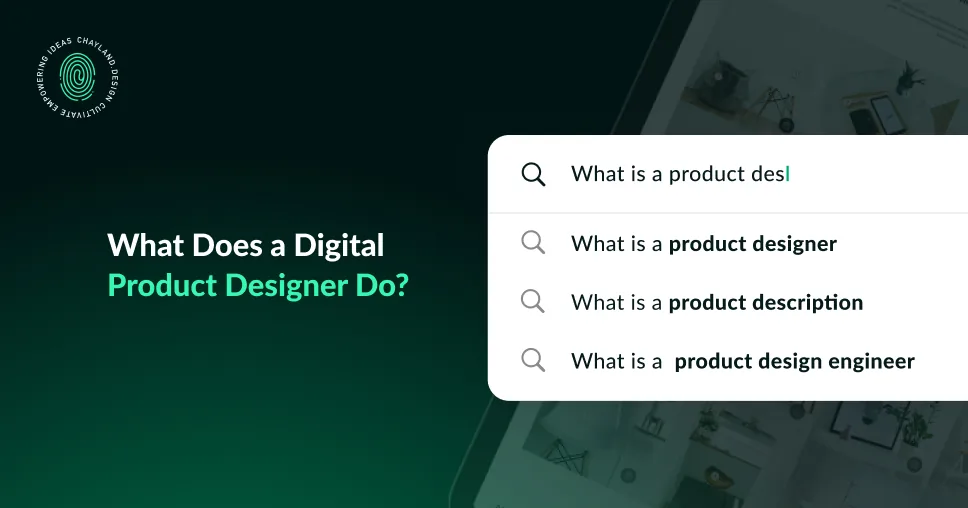
Digital product design is the practice of designing and refining digital experiences such as mobile apps, web platforms, and software tools. The goal is to create products that are usable, valuable, and aligned with both user needs and business objectives.
The process is iterative and research driven. It involves understanding user behavior, defining problems clearly, testing solutions early, and refining the product based on feedback and data.
A strong digital product designer ensures the product works in real conditions, not just in theory.
What’s the Difference Between Product Design and Digital Product Design?
Historically, product design focused on physical objects like furniture, appliances, or vehicles. As software became central to everyday life, the discipline expanded.
Today, there are two distinct roles:
- Industrial Designers who design physical products
- Digital Product Designers who design interactive digital experiences (UX + UI)
Digital product design combines usability, visual design, business strategy, and development collaboration. It has evolved from a visual role into a cross-functional problem-solving function embedded throughout the product lifecycle.
Examples of Great Digital Product Design
Some of the most successful technology companies demonstrate the impact of strong digital product design.
- TikTok: Known for its addictive algorithm and short-form video format, TikTok’s design keeps users engaged through seamless UX and hyper-personalization.
- Airbnb: It reimagined travel by turning homes into bookable rentals, solving a real need with intuitive navigation, trust-building features, and elegant UI.
- Amazon: From one-click ordering to reliable delivery, Amazon’s design prioritizes convenience and speed making it the go-to platform for millions.
These companies did not succeed on ideas alone. Their products scaled because the design made the experience usable and repeatable.
What Does a Digital Product Designer Actually Do?
A digital product designer is responsible for shaping the end-to-end customer experience across a product.
Typical responsibilities include:
- Conducting user research and synthesizing insights
- Creating personas, user flows, and wireframes
- Designing prototypes and high-fidelity interfaces
- Testing and validating features with real users
- Collaborating with engineers, product managers, and stakeholders
- Supporting developer handoff to ensure accurate implementation
The role is not about producing screens. It is about delivering outcomes that users can understand and adopt.
Key Qualities of a Strong Digital Product Designer
Effective product designers share several traits:
- Curiosity to investigate real user problems
- Strategic thinking that connects design to business goals
- Empathy for users without ignoring constraints
- Collaboration across engineering and product teams
- Communication that explains design decisions clearly
Strong designers guide teams through uncertainty and help products mature with intention.
Tools Digital Product Designers Use
Digital product designers rely on a range of tools to support research, design, and collaboration.
Collaboration and ideation:
Visual design:
UI/UX design & prototyping:
Development handoff and alignment:
These tools support everything from early concept exploration to developer-ready specifications.
Why Hiring a Digital Product Designer Is Worth It
A skilled product designer helps your product do more than exist—they help A skilled digital product designer reduces risk. They validate assumptions early, identify usability issues before development, and help teams focus on building what users actually need.
Hiring a product designer means adding a partner who contributes to strategy, research, and execution, not just visuals.
Well-designed products cost less to fix, scale more predictably, and retain users more effectively.
Make Your Product Irresistible
Strong ideas are not enough. Products succeed when design aligns user needs, business goals, and technical execution into a coherent experience.
At Chayland Design, we work with teams to design digital products that are clear, usable, and built for long-term growth. Whether you are launching something new or improving an existing product, the right design partner helps turn uncertainty into progress.
If you want users to adopt and rely on your product, digital product design is not optional.