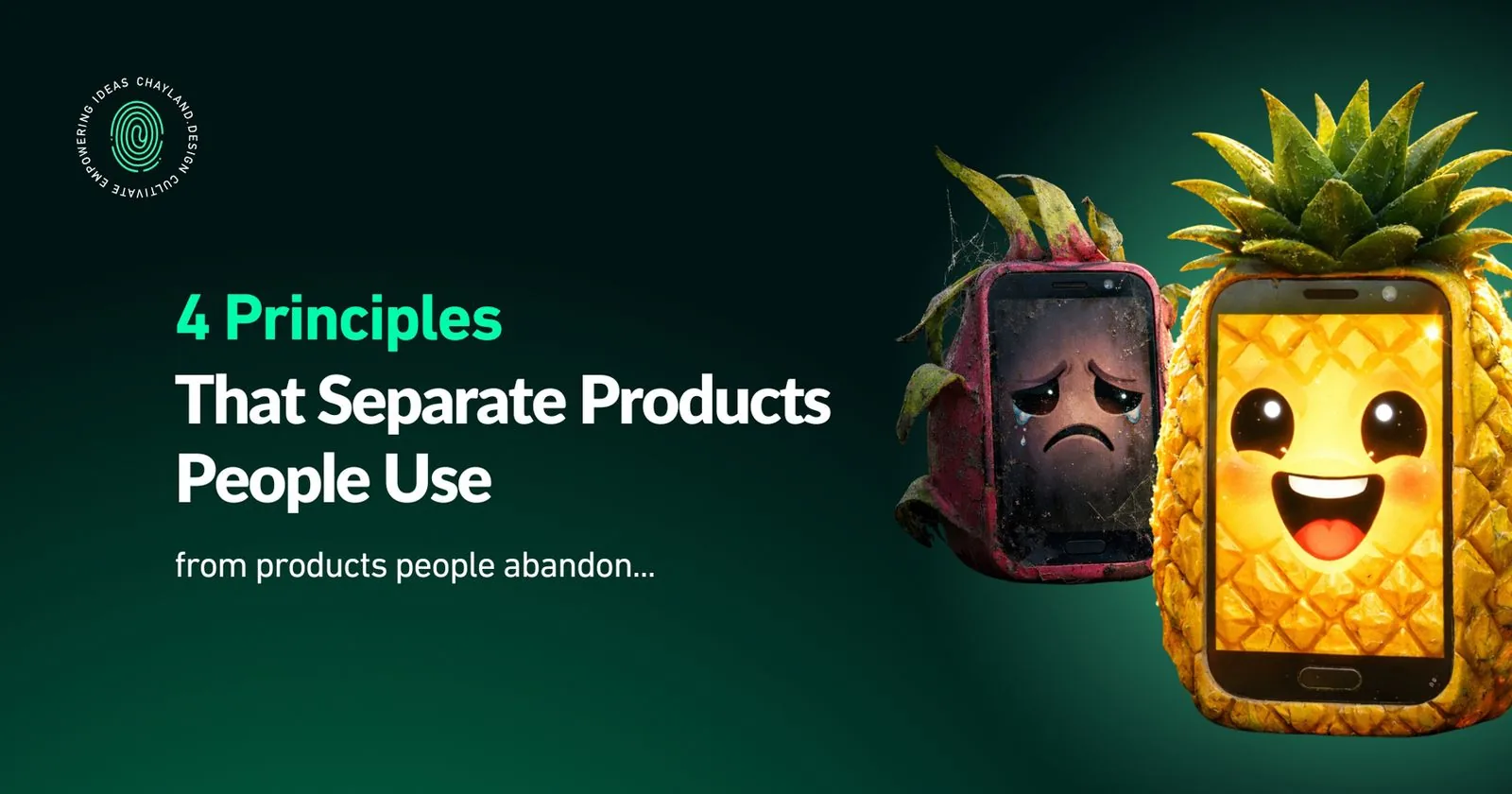
Most product teams can build features. Getting users to actually adopt them is harder.
Product adoption depends on design principles. Whether you're building a SaaS platform, ops tool, or AI workflow, four design decisions determine whether users stick with your product or leave after the first session.
If you're a founder, product owner, or designer struggling with low retention, the gap between shipped and adopted comes down to these four principles.
1. User-Centered Product Design
Your product exists to solve a specific problem for specific people in a way they can actually use.
This means understanding:
- What your users are trying to accomplish
- How they currently solve it (and what tools they're already using)
- Where their current solution breaks down
- Whether your product can replace their current behavior with less effort
Before building, validate which features actually move your core metric.
The questions that matter:
1. What problem are users solving today, and how are they solving it? What apps are already part of their workflow?
2. What's missing from those solutions? What causes friction?
3. Can users accomplish their goal without training or documentation? If they can't, the product isn't done.
4. Is there anything in the workflow that could be removed or simplified?
Resources:
2. Functionality Over Aesthetics
Design that prioritizes trendy UI over core workflows breaks the user experience. When workflows are confusing, users leave and support requests increase. When products fail without clear communication, users lose trust.
Trendy UI doesn't matter if the core workflow is broken. Your product should work intuitively. Every feature, button, and interaction should have a clear purpose and should operate without friction.
If users need a tutorial to complete a basic task, the product has a functionality problem.
The questions that matter:
1. Have you eliminated unnecessary complexity?
2. Does each component serve a clear purpose?
3. Can users complete their tasks efficiently and reliably?
4. Have you prioritized critical workflows to ensure they work flawlessly?
Resources:
- MVP Product Strategy Workbook
- People + AI Guidebook (from Google)
- Google AI Principals
- Design & Plan (Android)
- Human Interface Guidelines (Apple)
3. Visual Design That Guides Users
Aesthetics create the visual language that guides users through your product.
Good aesthetics show hierarchy, trigger the right emotions, and reinforce your brand. They make your product recognizable and direct users to the right actions at the right time.
Aesthetics shape how your product feels. They should match both your brand and your users' expectations.
The questions that matter:
1. Do the visual elements align with what users need to accomplish?
2. Does the design tell a cohesive story?
3. Have you created an environment users want to return to?
4. Is there a balance between innovation and familiarity?
Resources:
- Barebones Branding Foundations Workshop
- Brand Guidelines Template
- My Top 3 Go-To Front-End Frameworks (and their Documentation)
4. Product Usability Standards
A usable product doesn't make users think. They can navigate it, find what they need, and accomplish tasks without confusion or frustration.
Usability starts with understanding your users. Clear documentation and handoff processes help teams maintain usability standards across releases. When you design for their actual workflows and mental models, complexity disappears. Users navigate without training and stick with the product.
Simplicity and clarity drive adoption. Friction drives churn.
The questions that matter:
1. Can users navigate the product without documentation?
2. Can they find what they need quickly?
3. Is the experience enjoyable, not just functional?
4. Have you removed obstacles from the core workflow?
Resources:
The Balance
Product design happens through iteration. You adjust, test, and refine until the right balance between function and feel emerges.
Great products require clear thinking and deliberate decisions. They happen when you focus relentlessly on what users need to accomplish, not what features you can build.
If you're building an ops app, an AI workflow tool, or any product where adoption determines success, these four principles clarify where to focus.
Need help bringing your product to life? Reach out at chay@chayland.com or schedule a call.